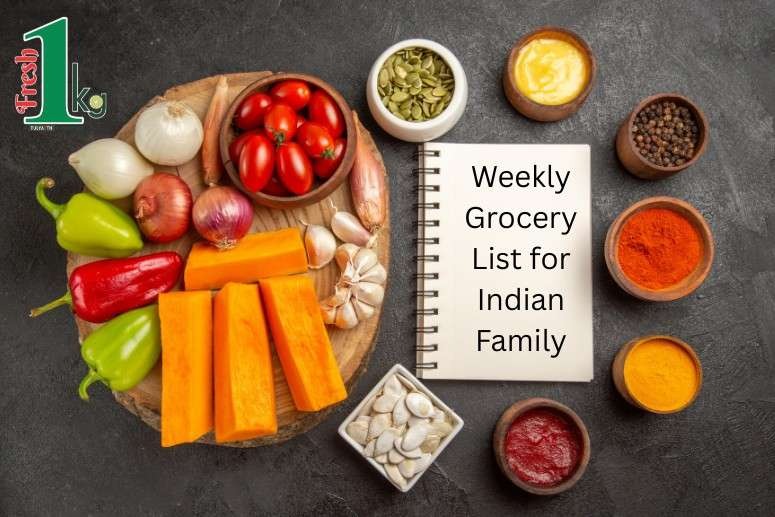
Weekly Grocery List for Indian Family Budget Friendly Shopping Guide 2026
Last Sunday, my mother called me around dinner time. She sounded stressed. She had opened her fridge and found nothing to cook for the next day. No vegetables except half a brinjal and no tomatoes or onions. She had to go out at nine at night to buy basics for Monday morning. I told her what I tell everyone who struggles with this. You need a weekly grocery list. Not a rough idea in your head. Not a mental note. A real list on paper or your phone that you take to the shop.
My mother started making lists after that call. She now spends less time shopping and less money too. More importantly, she never panics about what to cook.
At Fresh1kg, we see this problem every day. People want to feed their families well but shopping feels overwhelming. You can read about why we started this company on our about us page. If you ever get stuck or need help, our contact us page connects you to real people who actually respond.
What Belongs in a Weekly Grocery List for Indian Family
A weekly grocery list for Indian family meals looks different from what you see in Western cooking blogs. We cook with different ingredients, and we use more spices, so we need vegetables that work in curries and sabzis.
When I make my list every Saturday night, I think about seven days of food. Breakfast, lunch, dinner, and those random times when someone wants a snack. For four people, that adds up but it becomes simple when you break it down.
You need file categories. Grains for energy. Proteins to keep everyone full. Vegetables for taste. Fruits for easy snacking. Dairy for making everything better.
Let me walk you through exactly what I buy and why.
Your Grocery List for Family of 4 in India
A grocery list for family of 4 in India starts with the stuff you use without thinking. Rice comes first. My family goes through about two kilograms every week. Some weeks my husband wants biryani so we use more. Other weeks we eat more roti so rice lasts longer. I buy a five kilogram bag at the start of the month and that covers us easily.
Wheat flour works the same way. A five kilogram bag lasts us around three weeks. If your family eats roti for breakfast and dinner like mine does, you might need ten kilograms a month. Pay attention to how much you actually use.
Dal confuses a lot of people. You do not need every type of dal every single week. Pick two or three. I keep toor dal for everyday cooking. Moong dal for when my daughter has a cold and wants something light. Masoor dal for days when I am running late because it cooks fast. One kilogram of each lasts two to three weeks easily.
Vegetables for Your Basic Grocery List for Indian Kitchen
Your basic grocery list for Indian kitchen always starts the same way. Onions and tomatoes. You cannot make much without these two. I buy two kilograms of onions and one kilogram of tomatoes every week. Keep them in a basket away from the stove and they last seven to ten days.
Potatoes are next. I buy two kilograms every week. They sit in my kitchen for weeks without going bad. I use them for breakfast parathas, for lunch curries, and for dinner when I have no other vegetables left.
Green vegetables need more attention. Spinach, methi, cabbage, cauliflower. These do not last long. Buy only what you will cook in the next three or four days. I shop on Sunday and plan to use my greens by Wednesday at the latest.
For the rest of the week, I buy vegetables that last longer. Carrots stay fresh for over a week in the fridge. Beans last five to six days. Capsicum stays good for a week. Brinjal sits on my counter for four or five days without any problem.
Essential Grocery Items List India Families Always Need
Your essential grocery items list India should include things you use daily but somehow always forget to check until they run out.
Oil is the biggest culprit. My family uses about two liters every two weeks. I buy a five liter can now and it lasts over a month. The big can costs less per liter too so I save money without trying.
Milk needs weekly attention. Four people drinking two liters every day means fourteen liters for the week. I buy from a local vendor who delivers every morning. Some families use powdered milk to save money. Do whatever works for your home.
Curd is so easy to make at home. I buy two extra liters of milk each week and set curd in a clay pot. It tastes better than anything from the store and costs half the price. My mother taught me this and I will never go back to buying curd.
Spices sit in your kitchen for months but you need to check them. Turmeric powder, red chili powder, coriander powder. I use these daily. I buy two hundred gram packs and they last two to three months. Cumin seeds and mustard seeds last even longer because I use less.
Fruits for Your Weekly Grocery List
Fruits are where I used to waste the most money. I would see nice apples or those imported grapes and throw them in my cart. Then they would sit in my fridge until they went soft and I would throw them away.
Bananas are my safe choice now. I buy one dozen on Sunday. They ripen slowly through the week. By Friday they are perfect for making milkshakes or banana bread for my daughter. Nothing gets wasted.
Seasonal fruits save money. In winter I buy oranges and guavas. In summer I look for watermelons and muskmelons. Mango season is expensive but my family loves them so I buy some every week while they last.
For lunchboxes, apples work best. I buy one kilogram on Sunday and they last the whole week. Papaya is another good option. One medium papaya cut fresh each morning feeds everyone.
Monthly Grocery List for Indian Family Bulk Shopping
A monthly grocery list for Indian family shopping helps you save on things that do not spoil.
Rice and atta are cheaper in big bags. I buy ten kilograms of rice and ten kilograms of atta at the start of every month. I store rice in a big container with a tight lid. During summer, I keep atta in the fridge so it does not get bugs.
Oil and ghee are also good for monthly buying. A five liter can of oil lasts over a month. A one kilogram tin of ghee lasts even longer because I only use it for special dishes.
Dals can be bought monthly but you need to store them right. I wash and dry them in the sun for an hour before putting them in containers. This stops bugs from growing. My grandmother taught me this and it works every time.
Spices are fine to buy monthly. Small packs cost more per gram so I get two hundred gram packs of my most used spices. They last and I save money.
My Weekly Grocery List You Can Copy
Here is exactly what I buy every Sunday. Copy this list and change it for your family.
Rice and Grains
- Rice three kilograms
- Wheat flour two kilograms
- Poha five hundred grams
- Oats five hundred grams for rushed mornings
Dals and Proteins
- Toor dal one kilogram
- Moong dal five hundred grams
- Masoor dal five hundred grams
- Eggs one dozen
- Paneer two hundred fifty grams
Vegetables
- Onions two kilograms
- Potatoes two kilograms
- Tomatoes one kilogram
- Spinach two big bunches
- Carrots five hundred grams
- Beans five hundred grams
- Capsicum three pieces
- Lemon six pieces
Fruits
- Bananas one dozen
- Apples one kilogram
- Seasonal fruit one kilogram
Dairy
- Milk fourteen liters
- Curd two kilograms if I am not making it
- Butter two hundred fifty grams
Other Things
- Cooking oil I check before buying
- Tea two hundred fifty grams
- Biscuits one family pack
- Roasted chana five hundred grams for snacking
How I Make My Groceries Last
Buying the food is only half the work. Storing it right makes everything last.
Onions and potatoes stay in different baskets. Onions release moisture that makes potatoes sprout faster. I learned this after throwing away too many sprouted potatoes.
Tomatoes sit on my counter but not in sunlight. If they start getting too ripe, I put them in the fridge. They lose some flavor but last another week.
Green vegetables go in the fridge wrapped in newspaper. Newspaper soaks up extra moisture and keeps them fresh. I change the paper after three days.
Bananas stay on the counter. When they get too ripe, I peel them and throw them in the freezer. Later I use them for smoothies or baking.
Milk goes in the coldest part of my fridge. Not in the door where the temperature changes every time someone opens it.
What I Learned About Shopping
Shopping with cash changed everything for me. When I use a card, I spend more. When I see actual rupees leaving my hand, I think twice about buying things not on my list.
I go to the market early now. By seven in the morning, vendors have the freshest vegetables. By nine, the good stuff is gone and only the leftovers remain.
I talk to my vegetable vendor. I told him I come every week. He sets aside good quality stuff for me now. Regular customers get treated better.
I check my kitchen before I leave. Sometimes I have half a kilogram of rice left or some onions from last week. I write down what I actually need, not what I need.
I never shop hungry. Everything looks good when your stomach is empty. I used to buy so many snacks this way. Now I eat before I go.